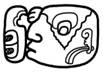


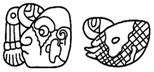
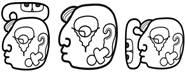
TOK.p36.r3.c2 BMM9.p14.r3.c3 25EMC.pdfp52.#1 MHD.PE1.1&2 1078va 1078vc 1078vs
? A…? YAH YA’ YA’

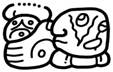
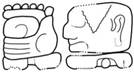
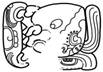
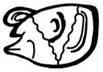
Grube-ALfYW.p1.fig1.1 Grube-ALfYW.p4.fig5 Grube-ALfYW.p4.fig6 Grube-ALfYW.p5.fig7 Grube-ALfYW.p8.fig10.a
= Grube-WwH.p170.fig3.f
DPL HS1 Step III D3 DPL HS2 Step V Bolonkin area ballgame yoke K2213
YAH / YA’ <u:CHAM>.<YAH:hi?> <u:CHAM>.<YAH:hi?> u.<<YAH[TUUN].ni>:a> YAH

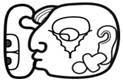


Grube-ALfYW.p1.fig1.2 Grube-ALfYW.p1.fig1.3 Grube-ALfYW.p2.fig2.1 Grube-ALfYW.p2.fig2.2 Grube-ALfYW.p2.fig2.3
YAX Lintel 37 A4 CPN Stela J back PNG Burial 13 incised shell
YAH YAH YAH YAH <?:T’AB[yi]?>.<YAH:TE’?>
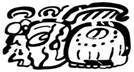

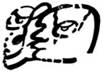
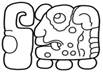
Grube-ALfYW.p3.fig4 Grube-ALfYW.p8.fig10.c Grube-ALfYW.p8.fig10.d Grube-ALfYW.p8.fig11.a
Pearlman 58 TIK Stela 10 G8 BPK Structure 1 Room 1 North Wall caption I-36 IXZ Panel 2 Block 4 S1-T1
<ya:YAH>.<ka:ba> ya.<YAH:la> a{j}.YAH <YAH+BAHLAM>:ma
· No glyphs given in K&H, K&L. The glyph given in BMM9.p14.r3.c3 (complete pronunciation not given) is not explicitly linked to the other examples here, but the similarity seems to justify it.
· 25EMC.pdfp52.#1 glosses this as “opening, wound”.
· Almost all the examples are from Grube-ALfYW, which proposes a reading of YAH/YA, and meaning “to wound”, “injure”.
· Features:
o Anthropomorphic head with a “stepped V” under the eye.
o Optional obsidian blade, acting as a kind of “signific” (it can be above or to the left, or even as a “forehead ornament” (YAX Lintel 37 A4)), to indicate the instrument with which the wound or injury is caused.
· Reading(s):
o Beliaev&Houston-ASSiMW (2020) gives YAH or YA.
o Grube-ALfYW (2020) proposes YAH or YA.
o Grube-WwH.p169.pdfp169.para2.l-2 and Grube-WwH.p170.pdfp170.fig3.f (2021) gives YA’.
o MHD and Bonn (dynamic and current) both give (only) YA’.
While it looks like there’s more support for YA’ than YAH (in the course of time), I prefer to continue to list the primary reading as YAH (i.e., as YAH1), while also giving YA’ as an alternative, in order to emphasize the possible connection to YAH2.