
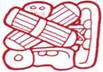

Schele-TFoLaCaoMS.p142.fig8a.4 = MC.p57.ex5 Schele-TFoLaCaoMS.p142.fig8a.9 = EstradaBelli&Tokovinine-AKA.p159.fig7b
CPN Altar Q B2 CPN Altar Q A5
<WIIN:TE’>.NAAH <WIIN:TE’>.NAAH


Schele-TFoLaCaoMS.p142.fig8c.1 Schele-TFoLaCaoMS.p142.fig8d = Bíró-ASNoWTN.p15.pdfp2.c1.fig4a
CPN (monument unspecified) CPN Structure 33
WIIN:NAAH:TE’ WIIN:NAAH


Schele-TFoLaCaoMS.p142.fig8e.1 = Bíró-ASNoWTN.p15.pdfp2.c1.fig4b Schele-TFoLaCaoMS.p142.fig8e.2
CPN Structure 33 CPN Structure 33
WIIN:NAAH WIIN:NAAH
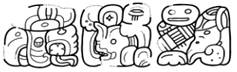
EstradaBelli&Tokovinine-AKA.p159.fig7d
CPN Stela 12 E11-E12
?:<a.<[K’IN]chi>:ni> K’UH{ul}.<“xukpi”:AJAW> <WIIN:na{TE’-NAAH}>.AJAW?
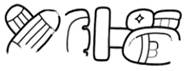
EstradaBelli&Tokovinine-AKA.p159.fig7f = Bíró-ASNoWTN.p14.pdfp1.fig3
HLM Building-A Frieze
WIIN.na NAAH.<TE’?:AJAW>


Schele-TFoLaCaoMS.p142.fig8c.2 = MHD
QRG
<WIIN:TE’>.NAAH

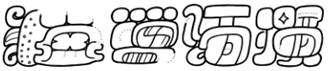
EstradaBelli&Tokovinine-AKA.p159.fig7a EstradaBelli&Tokovinine-AKA.p159.fig7h
TIK Stela 31 E15 TRS Stela 2 K7-L3
wi{in}:<TE’.NAAH> ?.<AHK:AJAW> 4.<bu.TZ’AK>:li wi{in}.<TE’:NAAH> a:AJAW:wa


Coll-1 = EstradaBelli&Tokovinine-AKA.p159.fig7c = Bíró-ASNoWTN.p14.pdfp1.fig2a
YAX Lintel 25 G2
wi.<WIIN:TE’:NAAH>
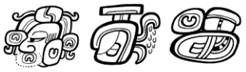
EstradaBelli&Tokovinine-AKA.p159.fig7g
K1446
NUUN? <NAAH:TE’>.wi{in} AJAW
· Bíró-ASNoWTN.p15.pdfp2.para1.l+3: Winte’ Nah was a quintessential place to which the subject lords travelled to receive the symbols of rulership, […] (at present we have examples from the Classic at Tikal, Copan, and Piedras Negras). Metaphorically then, we might see Winte’ Nah as “House of War” or “House of Weapons” or simply “House of Darts”.
· Bíró-ASNoWTN explains that there is a connection between the “face” in the WIIN glyph and the “goggles” which are strongly associated with Teotihuacan (the same “goggles” that are seen in representations of Yax K’uk’ Mo’, the founder of a new line of rulers at CPN, under the auspices of Teotihuacan).
o Bíró-ASNoWTN.p15.pdfp2.col1.para3.l+1: Added to T600 in the Late Classic Period is the “human face” element, which substitutes with the “goggles” in Copan in certain contexts (Figure 4a and b). [Sim: here Bíró is referring to the “google eyes” in Bíró-ASNoWTN.p15.pdfp2.c1.fig4b substituting for the “regular” face in Bíró-ASNoWTN.p15.pdfp2.c1.fig4a (albeit with the latter having a set of bent arms, holding up the NAAH above the head).]
o Bíró-ASNoWTN.p15.pdfp2.col2.para3.l+1: It is interesting that in Classic Maya iconography, as Karl Taube (2004:268-273) has pointed out, the “face” would be the goggle eyes of the Teotihuacan Storm God.
· Schele-TFoLaCaoMS.p142.fig8c.1&2 are simply labelled as “founder glyphs from Copan and Quirigua” without further indication of the monument they are from. MHD indicates that this is probably QRG Stela J D16, though the face is drawn very slightly differently.
· Schele-TFoLaCaoMS.p142.fig8d and Schele-TFoLaCaoMS.p142.fig8e.1&2 are simply labelled as “glyph from Copan Structure 33” and “glyphs from Copan Structure 33” respectively, without further indication of the monument they are from. Furthermore, both (i.e., all three) are labelled as being “from Copan Structure 33” which seems odd, because they are separated into Schele-TFoLaCaoMS.p142.fig8d and Schele-TFoLaCaoMS.p142.fig8e. If all three were from Copan Structure 33, they could all have been Schele-TFoLaCaoMS.p142.fig8d.1&2&3. Perhaps there is a typo in one of the “33’s”.
· EstradaBelli&Tokovinine-AKA.p159.fig7c (YAX Lintel 25 G2) is shown in mirror image in the paper, compared to the original monument. This is because the entire text of the original monument is in mirror image – reading from right to left instead of the usual left to right (reasons unclear). Mirroring it in the paper reveals the WIIN-TE’-NAAH structure more easily.
· CPN Stela 12 E11-E12 and HLM Building-A Frieze are two places which have a syllabogram na present as an end phonetic complement to WIIN, not as an underspelled naah = “house”.
· Bíró-ASNoWTN explains that:
o For a long time, the location was thought to be Wi’ Te’ Naah, which was glossed as “Tree-root House”, from wi’ meaning “root”. Another gloss was “Origin House”, based on the same idea (and also because so many rulers associated this place with the founding of their dynasty or their accession to power). Now read as Wiinte’ Naah, which Bíró suggests means “House of War”, “House of Weapons” or “House of Darts”.
o The -n which changes the reading from Wi’ to Wi(i)n is because of the end phonetic complement of na in the HLM Building-A Frieze. [Sim: that it begins with w- is from the initial phonetic complement of wi from other inscriptions.]
o The logogram can be read either as WIN or WIIN, the latter if the Lacadena-Wichmann rules for disharmornic spelling are applied.
· Bíró-ASNoWTN.p14.pdfp1.para4.l-3 speculates that there is probably also a connection to the toponym for CPN, Ox/Ux Wintik (making it Wintik with underspelled -n- instead of the more commonly cited Ox Witik).
· AT-YT2021-lecture22.t0:46:27-46:45 (reading/translating an inscription on the fly): He ascends at Wiin Te’ Naah […]; Yax Nu’un Ahiin – this is the new king of Tikal – he ascends to a place called Wiin Te’ Naah – we know it’s a temple at the great Mexican city of Teotihuacan.