
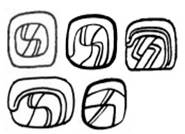


K&H.p87 K&L.p40.#3 TOK.p14.r4.c2 BMM9.p12.r7.c1 JM.p247.#3 = JM.p247.#2 = K&L.p40.#3.2
TZ’AK TZ’AK TZ’AK TZ’AK TZ’AK:AJ


Stuart Stuart Stuart Stuart
CRN Panel 1 D7 CRN Panel 1 S6 CRN Panel 1 V2 CRN Panel 1 V5a
u.<TZ’AK:AJ> u.<TZ’AK:AJ> u.<TZ’AK:AJ> u:TZ’AK:AJ
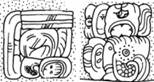
Stuart
CPN Stela 10 F8
u.<10:<TZ’AK.ka>:<bu.li>> <K’INICH.<[K’IN]chi>.ni>:<YAX:<K’UK’[MO’]>>
· Mostly written with the logogram rather than spelled with syllabograms, though the latter also does occur.
· Utz’akaj – the “DNIG” – is the most frequent context where TZ’AK occurs.
· Tz’ahkbul can be written with or without li, but when without, it’s just an underspelling:
o MHD has an underspelled but inserted -h-.
o It has to do with succession, can be “nth in succession” (when u-bolon is not present).
o It has to do with “many counted” (of a dynasty) (when u-bolon is present).
· Tz’akbuj is written with ji (and of course without li):
o Note the absence of the inserted -h-.
o It is a noun, “succession”, and is often preceded by u- (“his succession”).
· Concrete examples:
o u-TZ’AK-AJ è utz’ahkaj = “DNIG”
o u-TZ’AK-bu / u-TZ’AK-bu-li è utz’ahkbul = “his succession” [here u- is the possessive particle]
o u-<number>-TZ’AK-bu / u-<number>-TZ’AK-bu-li è u-<number> tz’ahkbul = “nth in succession” [here u- is the ordinal indicator]
o 9-TZ’AK-bu{l} è bolon-tz’ahkbul = “dynasty many-counted”
o 9-TZ’AK-bu{l} AJAW è bolon-tz’ahkbul ajaw = “dynasty many-counted lords”
o u-TZ’AK-bu-ji è utz’akbuj = “his succession”
· The word tz’ak is particularly interesting because there’s a very large set of logograms (more than 10), each consisting of a pair of elements – mostly side by side, but sometimes one on top of the other – where each member of the pair either contrasts with or complements the other, for example: “day and night”, “sun and moon”, “male and female”, “sky and earth”, “food and drink”, “wind and water”, “cloud and water”, “star and moon”, “stingray spine and blood”. Here, I’ve tried to list them with the “most contrastive” (= “opposites”) earlier and the “more complementary than contrastive” later, though (surprisingly) the difference between these concepts is perhaps greyer than one might have thought (e.g., are “food and drink” or “wind and water” more opposites or complements?). See the TZ’AK in the CMGG Concordance for a complete list, as recognized by either MHD or Bonn.
· These pairs may be considered as graphic examples of difrasismo. [Wikipedia, 2026-03-12: Difrasismo is a term derived from Spanish that is used in the study of certain Mesoamerican languages, to describe a particular grammatical construction in which two separate words are paired together to form a single metaphoric unit. This semantic and stylistic device was commonly employed throughout Mesoamerica, and features notably in historical works of Mesoamerican literature, in languages such as Classical Nahuatl and Classic Maya.] Note that the term, in its strict sense, applies to “a turn of phrase which pairs two separate words”, but here, in relation to TZ’AK, its meaning is being extended slightly, to include even “graphically” pairing two “glyphs” to form a “single glyph”.
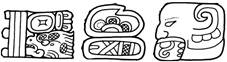
Martin
Randel Stela H4-I1-I2
18.<tz’a:ka> bu:li sa[ja]{l}
· A syllabogram-spelling, which is less common, but which does occur.