
AT-E1168-lecture11.t0:38:02
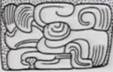
Incised Travertine Vessel B2-B3
K’AHK’.<NEH:<[chi]hi>:?> XOOK

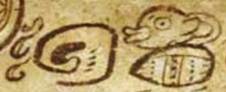
mayavase.com (EMC2021-AW-D3) mayavase.com (EMC2021-AW-D3)
K1181 K4116
K’AHK’.NEH tz’u.tz’i{h} K’AHK’.NEH tz’u.tz’i{h}
· Do not confuse neh = “tail” with the phonetically similar nehn = “mirror”.
· The example from the Incised Travertine Vessel B2-B3 is the name of a person: K’ahk’ Neh Chih Xook = Fire Tail(ed) Deer Shark.
· This logogram (and a number of others, like BAAH) is also used very often acrophonically as a syllabogram (without the end consonant). As in the case of BAAH, its use as a syllabogram may well exceed its use as a logogram. In such cases, it almost becomes a philosophical point whether there still is a logogram use, or whether it’s always a syllabogram use, and – in cases of writing the “original” meaning – it’s a matter of underspelling. I.e., the above examples could be transliterated either as NEH or ne{h}. My personal preference is to transcribe NEH whenever the meaning of “tail” is being written, as in the above examples, and only transliterate as ne when the glyph is being used purely for its sound-value. A logogram interpretation of MO’ vs. a syllabogram interpretation of mo for the same glyph presents the same “philosophical” issue, see under MO’ for further discussion of this. Each of these cases differs slightly from the others, because of the frequency of occurrence of the glyph is each of the two (logogram or syllabogram) interpretations, the degree to which the glyph can be seen to be a pictorial representation of the “meaning” of the word it’s writing, etc.