


TOK.p7.r1.c4 BMM9.p10.r6.c2 JM.p177.#1 JM.p177.#2 JM.p177.#3 JM.p178.#1
NAAH NAH NAH NAH NAH NAH
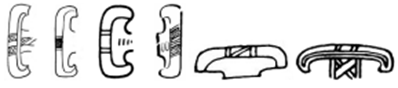
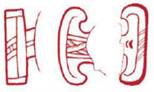
K&L.p29.#4 MC.p165.r1.c2.1&2&3
NAH NAAH / na / NOJ?

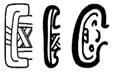


MHD.1G2a.1&2 MHD.1G2b.1&2&3 0004vb 0004vl 0004vr 0004vt
NAAH NAAH NAAH NAAH, na NAAH, na NAAH, na
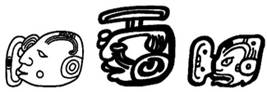


PY5.1&2&3 0004vs 0004vs
NAAH NAAH NAAH

0004vc
NAAH
· No glyphs given in K&H.
· AT-YT2021-lecture17.t0:23:05-23:55: And very much like [in] present-day Mayan languages, the term “house” naah actually refers to something more than a single building. Like archaeologists... we usually call it [a] “patio-group” – so it’s a group of houses sharing a courtyard. In [the] present-day Ch’orti’-speaking area, a house will also include the courtyard in front it – so it would actually be the “edge of the house”: ti’ naah for the “mouth of the house”. […] So the palace at Sufricaya (where I work) is called “Three Platform House”, basically there are three platforms around the courtyard. The palace at Palenque – initially at least – was called the “Five Platform House” – presumably the enclosed space with some central buildings in the middle.
· Variants (3):
o A. Reduced: “axe blade”.
§ MHD distinguishes between MHD.1G2a and MHD.1G2b, though the difference is not clear to me.
§ The difference isn’t a “left-pointing blade” vs. a “right-pointing blade” (which is the case for Bonn’s 0004vl vs. 0004vr.
o B. Head: “axe blade” + human-head:
§ The head can be below or to the right of the “axe blade”.
o C. Head-only: Just the human-head, without the “axe blade”.
· MHD statistics (2024-05-17) – the reduced variant is much more common than the head variant. The head-only variant is probably very rare – MHD doesn’t even recognize such a variant, it’s only given by Bonn:
o Reduced (“axe blade”): 1G2a (290 hits) + 1G2b (230 hits) = 520 hits.
o Head (“axe blade” + human-head): PY5 = 28 hits.
o Head-only: no statistics available, as MHD doesn’t have a codepoint for it.
o MHD.1G2s is the “axe blade” as syllabogram na. That doesn’t have that much to do with the “axe blade” as logogram NAAH, but the statistics are vaguely of peripheral interest here: 1G2s = 35 hits, so much less common than the logogram reading.