
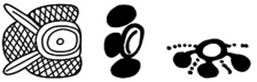

K&H.p48.pdfp50.#1.2 = 25EMC.pdfp42.#4.1 TOK.p24.r1.c3 BMM9.p5.c2.r3.3 25EMC.pdfp42.#4.1&2
MIH? / MINAN? MIH mi mi MIH


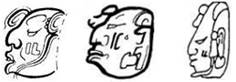

JM.p170.#3 MHD.SNC.2&4 1592st 1695st 25EMC.pdfp3.#0.2&4&5 (Montgomery/Thompson)
MI MIH / mi MIH mi MIH? / MINAN?
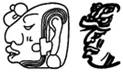


MHD.SNC.1&3 25EMC.pdfp3.#0.3 Stuart-TCZ.p1.fig1c
MIH / mi MIH? / MINAN? mi / MIH
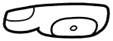
Sánchez-THSoHC (Polyukhovych)
PAL House C HS C5-C6 / B3a
0.<K’IN:ni>
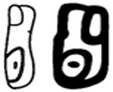

Coll-1 (Looper) Coll-1 (Looper)
QRG Stela F D4 / B4 QRG Stela F C5 / A5
0.WINIK 0.K’IN


TOK.p17.r3.c3 = AT-E1168-lecture6.t0:37.12 = AT-E1168-lecture6.t0:37.40 MHD.ZQ1
mi MIH / mi MIH / mi MIH / mi / “0”


K&H.p48.pdfp50.#1.1 = K&H.p75.pdfp77.r5.c3 = K&L.p49.r5.c3 BMM9.p5.r3.c2.1 Coll-2 Schele
QRG Stela C B4 QRG Stela C B4
MIH? / MINAN? mi mi mi MIH.WINIK MIH.WINIK


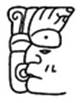
TOK.p9.r3.c3 JM.p169.#5 0173md 0173st T173abc 25EMC.pdfp3.#0.1&6&7
mi mi / MI mi - MIH? / MINAN?

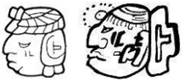
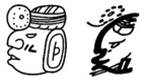
AT-E1168-lecture6.t0:50.25 AT-E1168-lecture6.t0:50:25 Stuart-TCZ.p1.fig1a
mi / MIH mi / MIH.hi mi / MIH

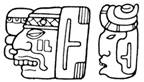


TOK.p19.r3.c4 25EMC.pdfp3.#0.8&9 MHD.MR2.1&2&3 0807st T807
mi MIH? / MINAN? mi mi -
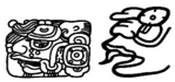
AT-E1168-lecture6.t0:50:25 Stuart-TCZ.p1.fig1b
<mi/MIH>:li mi / MIH


Coll-2 Coll-2 Coll-2
QRG Stela C B3 QRG Stela C A4 QRG Stela C A5
<mi:li>.WINIKHAAB <mi:li>.WINIKHAAB <mi:li>.WINIKHAAB

Schele Schele Schele
QRG Stela C B3 QRG Stela C A4 QRG Stela C A5
<mi:*li>.WINIKHAAB <mi:li>.WINIKHAAB <mi:li>.WINIKHAAB


BMM9.p5.r3.c2.2 JM.p170.#1 JM.p170.#2
mi mi/MI mi/MI


MHD.1GC.1 5000st MHD.1GC.2 AT-E1168-lecture6.t0:50:25
- - - -


Stuart-TCZ.p1.fig2 = MHD (Stuart, Hearst) MHD (Stuart)
XUL Structure 10K-2 North Wall XUL Structure 10K-2 Lunar Table Mural G2, N2, U2
mi / MIH ? ?


Stuart-TCZ.p2.fig3 (Stuart) = MHD (Grube) = MHD (MHD Archive)
PMT Panel 7 Jamb 3, Dallas Museum of Art 1968.39.FA
a.A’N[1:7:0] a.A’N[1:7:0]

0173fh
MIH
· Each of the five standard sources gives one or more variants, but the situation is very complex:
o No source gives all variants.
o For each variant, some sources give only a mi or only a MIH reading, and some sources give both readings (but not consistently for all the variants which they do give).
o Some sources give alternative readings besides mi and MIH, like mihil, minan.
o For example, TOK gives only mi, but MIH is given in AT-E1168-lecture6.t0:37.40; or JM gives both mi/MI (but in his time, the -h of mih was not read); K&H gives MIH? and MINAN?, both with question marks; etc.
o It’s questionable whether there is any benefit in trying to analyse which source gives which combination of readings for which variant.
§ I think it’s simplest just to behave as if all variants can be either mi or MIH, and if that’s too broad, then some of those will never be encountered in reality.
§ The only exception(s) are the “flint with dot” and the “shell” variants. They only occur as a coefficient in calendrical phrases (i.e., as a number), never as a syllabogram mi (to spell words). And in their role as a number, it’s uncertain if they were read MIH.
· AT-E1168-lecture6.t0:41:20-42:12- talks about the god-head variants and how most of what he proceeds to say is pure speculation: The fascinating point Maya numbers is that they also have what we call “head variants”. And we actually don’t know why – we don’t know how the system came into being, but the first twelve numbers [“1” to “12”] have a god – some kind of supernatural being – associated with them. And as far as I know, nobody ever published an article explaining why it happens – trying to understand the symbolism [or] the significance. We don’t know some of the gods of those numbers – and even if we know some of them, it’s still not clear what happens. What you’re going to hear now is just pure speculation – I like to speculate about my numbers. But it’s kind of fascinating: it’s one of those things where you can pretty much say what you want because nobody else even thinks about it. It’s still such an open field, the symbolism of these characters.
· AT-E1168-lecture6.t0:51:34-52:12: And then there’s a word that means “zero” – mih or mihil. And it is spelled with this four-petalled flower, sometimes with elaborate phonetic complements – this is just the hi-sign. And then there’s a shell-like thing held by a hand, that’s a syllable mi or a MIH [unclear]. And there’s this little shell form. [It] occurs in the codices, but now we discovered some murals in Xultun – archaeologists discovered some murals at Xultun which actually used this character at the end of the Classic period. So we know it was probably in the manuscripts, but not so much in the inscriptions or the carved monuments.
· Variants of “0” (6):
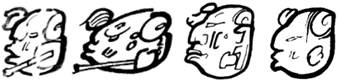
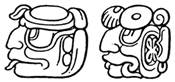
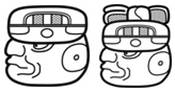
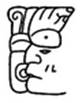
o A. Anthropomorphic head with hand-jaw:
§ Top: Forehead ornament resembling HA’ or ba, but without the blades of grass at the bottom.
§ Right: Complex ear with long strands of hair.
§ Cheek, optionally, either:
· %-sign, or
· 3 non-touching dots in a triangular formation, pointing down.
§ Bottom:
· Hand covering chin – thumb covering lips, forefinger points at ear, little finger points to back of head.
· Hand (optionally) in a gesture slightly resembling “devil’s horns”, but with outstretched thumb.
PAL House C HS C5-C6 / B3a has a CHAPAAT headdress, but the distinguishing characteristic still remains the hand-jaw.
There may be a (sub-)variant with a head that is less anthropomorphic and more “reptile” or “bird” (QRG Stela F D4/B4, QRG Stela F C5/A5). PAL House C HS C5-C6/B3a is a god-head (note the square eye with “cruller”), but it’s unclear to me if this is distinct sub-variant from the more “human” heads (with %-signs on the cheek). Similarly, it’s unclear to me if the ones with a boniness property marker (MHD.SNC.1&3, 25EMC.pdfp3.#0.3) are a separate sub-variant. TO BE INVESTIGATED.
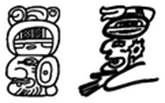
o B. Flower (note: not “the head of a bee” with the two long petals as “feelers”, as per Koedam-FNStND):
§ Washer, surrounded by:
§ 1 roughly rectangular and 2 roughly square petals, each:
· Rounded.
· Bold outline.
· Cross-hatched.
§ 2 long, thin “leaves” between the 3 petals, each optionally with a spine.
This is a sub-variant of the “full flower” form, which is more symmetrical (all petals equal sized), with four large petals and four long thin “leaves” (e.g. 0173md). The reduced form is far more common than the full form. Stuart-TCZ.p1.fig1a shows an extremely reduced form, with no long thin “leaves” at all. The petals are commonly darkened (= cross hatched), and the “leaves” can optionally have a spine (AT-E1168-lecture6.t0:50.25). As can be seen from the examples, almost all petats have bold perimeters.
o C. Hand holding shell:
§ Right hand with fingers slightly or fully curled and pointing to the right, viewed from the back of the hand.
§ A partitive disk (“washer”) in the bottom left.
§ The hand grasps a “shell” (this element resembles the syllabogram yi).
§ Optionally has a “li” or “AK’AB”-like element at the bottom, spelling mihil.
o D. Plain hand:
§ Open right hand, viewed from the back of the hand.
§ Fingers and thumb outstretched and pointing straight upwards.
§ Optional fingernails.
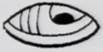
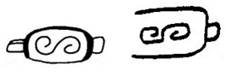
o E. Shell (mostly Codex form):
§ Rather abstract and difficult to describe – a shell? – see examples.
· It’s unclear to me if we should distinguish the very “rounded” flint form (MHD.1GC.1, 5000st) from the form with sharp ends (MHD.1GC.2, AT-E1168-lecture6.t0:50:25).
· The “rounded flint” form is found only on the walls used for calendrical calculations at XUL. Stuart-TCZ is a paper which discusses and explains them.
· The “shell with pointed ends” form is found only in the Codices, though I recall a lecture where it was asserted that there were one or two occurrences in the Classical period (not confirmed by MHD, see statistics below).
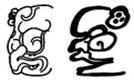
o F. Full figure:
§ Bonn has assigned a code for the full-figure variant of MIH (0173fh).
· Do not confuse the head variant of MIH with the visually (slightly) similar (bird-)head variant of PIK/PIH. They are both head glyphs with a hand-jaw, but:
o MIH is an anthropomorphic head while PIK/PIH is a bird-head.
o Furthermore, MIH can have an optional %-sign (or three non-touching dots in a triangular formation, triangle pointing downwards) and (also optionally) some skull/bone/death-like characteristics, absent from PIK/PIH.
These two will generally only occur in different contexts (e.g., the former as a coefficient and the latter as a calendar unit), so there should be no confusion. But “abstractly”, when thinking about “loose glyphs” out of context, it’s easy to confuse the two.
· MIH can also be a verb meaning “to make content”, “to appease” – see Tokovinine-PaIiCMN.p39.pdfp48.para3.