
K&L.p65.G8.3 = MC.p50.G8.1
Glyph-F[Glyph-G]


K&L.p65.G8.4 = MC.p50.G8.2 K&H.p51.TabVIII.8
Glyph-F[Glyph-G] Glyph-F[Glyph-G]


Gronemeyer-GGF.p10.pdfp10.fig9a Gronemeyer-GGF.p10.pdfp10.fig9b Gronemeyer-GGF.p10.pdfp10.fig9f
CPN Stela 10 A4 PAL TC A10 YAX Lintel 21 B4
Glyph-F[Glyph-G] Glyph-F[Glyph-G] Glyph-F[Glyph-G]
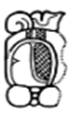
K&L.p65.G8.2 = Gronemeyer-GGF.p10.pdfp10.fig9e
Randel Stela B5
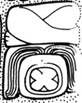

Martin Martin
Randel Stela B6 Randel Stela D1


K&L.p65.G8.1 = Gronemeyer-GGF.p10.pdfp10.fig9d Gronemeyer-GGF.p10.pdfp10.fig9c
SBL PT 1 D2 PNG Stela 14 B7a
· Distinguishing characteristic is a cross-hatched blob (characteristic of the “floppy pear” variant of HUL).
· Mnemonic: a pear has a basic shape of a figure “8”.
· There’s not much unity between the variants – the common theme is the cross-hatched blob.
· Variants (3):
o A. The “floppy pear” variant of HUL.
o B. The “floppy pear” variant of HUL infixed in the top of skull :
§ The nose hole and bone-jaw of the skull are present.
§ The eye is a crescent / “kidney” with an “inverted-C” dotted protector on one side, as in the syllabogram xi). This is in contrast to the day name EB, which has a partial crescent on the right, with dotted protector (the crescent eye of Glyph-G8 and xi are, of course, in the middle).
§ The ear is a “kidney” or crossed bands (in the two examples given – unclear how characteristic these are).
§ The outline of the “floppy pear” is bold, and in one instance, the right side continues curling upwards up in a slight scroll at the middle of the bottom (Randel Stela B6).
o C. (Perhaps?) a full human figure, with a cross-hatched blob in the body
§ The figure is seated or crouching (on the ground) and is (uncharacteristically) facing to the right.
§ There are echoes of the bold outline of the “floppy pear” in the outline of the figure – the vertical “indentation” in the middle of the bottom of the “floppy pear” corresponds to what might be a bent leg, with the top of the indentation being the knee. (This however might be an illusion caused by too few examples – perhaps it’s only an “abstract” glyph, and the irregular right side is the edge of an obsidian blade?)