

K&L.p65.G7.2 = MC.p50.G7.2 MHD (Vepretskii)
Conch trumpet, Museo Nacional de Arqueología y Etnología, Guatemala 4528 A2
Glyph-G7 Glyph-G7:<*na?:*ni?>
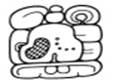


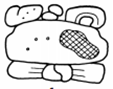
MHD (Hunter) MHD (Graham) MHD (Stuart/Martin) Gronemeyer-GGF.p9.pdfp9.fig8e (Looper)
CPN Stela 2 A6 NAR Stela 2 C4 PNG Stela 8 A5 QRG Stela D A8
<Glyph-G7:<*na?/*ni?>>.Glyph-F Glyph-G7 *Glyph-G7:*na? <Glyph-G7:<*na?/*ni?>>


MHD (Schele) MHD (Moot) MHD (Graham)
CPN Stela 16 D3 PALT21 Hieroglyphic Bench G4 TNA Monument 171 D2
Glyph-G7.<<?.ja>:K’AL:la> Glyph-G7 Glyph-G7


K&L.p65.G7.1 = MC.p50.G7.1 K&H.p51.TabVIII.7 Gronemeyer-GGF.p9.pdfp9.fig8d
PNG Stela 3 Back B4
Glyph-G7 Glyph-G7 Glyph-G7
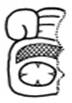

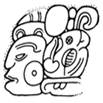
K&L.p65.G7.3 = Gronemeyer-GGF.p9.pdfp9.fig8a K&L.p65.G7.4 = Gronemeyer-GGF.p9.pdfp9.fig8b K&L.p65.G7.6 = Gronemeyer-GGF.p9.pdfp9.fig8c
BPK Stela 2 A2 CPN Stela 5 AS5 PAL Palace Tablet A15
Glyph-G7:<ma?> Glyph-G7.<ja?> Glyph-F[Glyph-G7]
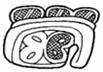



MHD (Schele) MHD (Schele) MHD (Schele) MHD (Schele)
CPN Stela 5 A5 PAL Palace Tablet A15 PAL Palace Tablet R9 PNG Palace North Facade Tablet Ap1
< Glyph-G7.ja>:Glyph-F Glyph-F[Glyph-G7] Glyph-F[Glyph-G7] Glyph-F[Glyph-G7]

MHD (Graham)
YAX Lintel 26 E1
<?:Glyph-G7>.<Glyph-F>

K&L.p65.G7.5 = Gronemeyer-GGF.p9.pdfp9.fig8g = Graham
YAX Lintel 29 B4a YAX Lintel 29 B4a
Glyph-G7 Glyph-G.Glyph-F
· Distinguishing characteristic: NAAH. The rest of Glyph-G7 is either different “main signs” or different variants of the same “main sign”.
· The Glyph-G7 of QRG Stela D is the same glyph-block in both Gronemeyer-GGF.p9.pdfp9.fig8e and the Looper drawing, but using two different systems of glyph-block labelling (A8 in Gronemeyer-GGF.p9.pdfp9.fig8e but A15 in the Looper drawing).
· Variants (5) of “main sign” (the not-NAAH part):
o 1. Abstract (SAK-like) – 3-4 elements, stacked from top to bottom:
§ a. Short trifoliate element, resembling a reduced form of tzi.
§ b. A lo or lo-like element.
§ c. A boulder outline with infixed crescent pointing up – the boulder has reinforced walls and ceiling (= “symmetric cave”).
§ d. A syllabogram na (which could also be ni).
Some sub-variants have only 2-3 stacked elements, with “b” and/or “d” missing and only “a” and “c” are always present. MHD reads this as MHD.3M1/SAK, not distinguished from the “regular” SAK, although the “regular” SAK (rarely) has the lo-like or the crescent in the largest element and never has the na-like / ni-like element. One sub-variant might even have both na and ni. The whole of this variant of Glyph-G7 is transliterated as MHD.1G2a-MHD.3M1/NAAH-SAK, with the lo, crescent, na and ni not treated as significantly distinguishing the SAK-like glyph from “regular” SAK.
o 2. Representational-A - an animated variant of “1”:
§ Top: the SAK-like glyph of “1”.
§ Bottom: a (young man’s?) head with “1” above it, partly merged into the top part of the head.
But almost none of the distinctive characteristics of “1” (the characteristics which distinguish it from a “regular” SAK) are present. In most cases, the glyph above the head resembles a “regular” SAK or even a reduced variant of a “regular” SAK, with the lo-like element, bracket (normally present between the round element and the trifoliate element), or the crescent missing, or with a bifoliate instead of trifoliate element at the top. In fact, only one instance has the crescent. MHD transliterates these as MHD.PL2b/SAK or MHD.3M1/SAK.
o 3. Representational-B – related in some way to Representational-A:
§ Top: a left fist viewed from back of hand. This completely replaces the SAK-like element if “2”.
§ Bottom: a (young man’s?) head with optional earspool – earspool can have multiple small elements at the bottom.
Mnemonic: “he’s seven times a knucklehead” – “seven” meaning “all” or “complete”, like in “The Seven Seas”, and the knuckles being prominent in a fist (a mnemonic which needs other mnemonics to support it!). MHD transliterates this as MHD.PL2b/SAK, not distinguishing the variant with the fist from the variant with the SAK-like glyph, with both read as SAK.
o 4. Representational-C:
§ An older(?) anthropomorphic head with a bunch of hair in the top left (on the forehead, outside the main outline) and another bunch of hair in the top right (inside the main outline).
§ The bunch of hair on the right is shaped like a rotated L and ends, at the bottom right in a partitive disk.
§ It might be a woman because:
· The bunch of hair on the forehead is often found in glyphs related to women.
· The “beauty spot” on the cheek is often (but not exclusively) associated with women.
When not infixed in Glyph-F, this variant appears to have other syllabogram complements like a reduced variant of ma (three touching dots) or a reduced variant of ja (half of the moon-glyph).
MHD considers this to be the “MNA” (Maybe-Not-Ajaw) glyph, which forms part of the last part of the name of God-GIII of the Palenque Triad.
o 5. Upside-down la-face.
§ The la is below the NAAH and is the simplest variant – the “upside-down AJAW-face”.
§ Dorota: Gloria in the scans p3 says it can also be NAL: glyph NAL or head variant of “2” (or something else).
§ The cases where there is a la at the bottom could be because of the NAL.
MHD transliterates na-la and transcribes naahal for BPK Stela 2 A2 and YAX Lintel 29 B4a.
· Do not confuse the “animated SAK” (if it is, indeed, SAK) variant of Glyph-G7 with the head variant of the number “2”:
o What they can have in common are (on the right):
§ Top: a left-hand fist with thumb pointing up.
§ Bottom: a youthful head.
o What distinguishes them (on the left):
§ Glyph-G7 has NAAH.
§ Numeral “2” has (or rather, can have) SAK.
These two will generally only occur in different contexts, so there should be no confusion. But “abstractly”, when thinking about “loose glyphs” out of context, it’s easy to confuse the two. MHD goes as far as to consider them the “same” glyph with two very different readings: MHD.PL2a/cha’ = “2” and MHD.PL2b/sak = the non-NAAH component of Glyph-G7.
· MHD statistics (2025-03-30)
o An MHD query with “blsem contains Glyph 07” yields 23 hits:
§ 6 hits where the glyphs involved are indeterminate:
· 2 hits: the lack of an image – PNG Stela 1 E8, TZI (Tz'ibatnah) Stela 1 B2.
· 3 hits: excessive erosion in the available image – BLK (Balakbal) Stela 5 B4, QRG Stela E C6, TRT Monument 6 J7.
· 1 hit: clear but unfathomable glyph-block – YAX Altar 10 H1.
§ There are 6 without NAAH:
· Eroded to the point of being illegible (2 hits):
o BLK Stela 5 B4.
o PNG Stela 1 E8.
· No obvious Glyph-G7 (1 hit):
o QRG Stela E C6: the left glyph could be read as NAAH (which MHD doesn’t do
· Have a HUL (3 hits):
o CML Brick 3: HUL IB (but perhaps the HUL could be read as a NAAH (which MHD doesn’t do).
§ There are 16 with NAAH:
o There are 8 of these which have a SAK-like glyph, which MHD reads as SAK.
A proportion of 16 out of 22 is a significant if not overwhelming majority, confirming that NAAH is indeed a good diagnostic for Glyph-G7.
· There is a very strange variant K&L.p65.G7.7 = Gronemeyer-GGF.p9.pdfp9.fig8f, which has u instead of NAAH, and TIL:li which seems to have nothing to do with the other variants of Glyph-G7 – K&L describes it as Glyph-F[Glyph-G] (the 3-part element on the top of the right side is just the reduced variant of TI’, from Glyph-F):
|
|
|
|
|
K&L.p65.G7.7 = Gronemeyer-GGF.p9.pdfp9.fig8f |
Looper (Coll-2) QRG Stela E West Side A6 |
Tolles A6 |


o This is probably because it’s incorrectly drawn. Examination of the Tolles photograph provided by MHD suggest that it could be Glyph-G8. In any case, not the TIL/TILIW proposed by Gutiérrez-PhD.p146.pdfp159.
o It is almost definitely based on QRG Stela E West Side A6:
§ QRG Stela is a very tall monument, so it is hard to see the top part, where A6 is located.
§ The drawing by Looper of the stela itself shows that the middle of A6b is quite eroded and hence unclear – it doesn’t show a definite KAWAK with an arm on each side – this is additional interpretation in K&L and Gronemeyer-GGF. The Looper drawing suggests slightly that the middle element on the right is in fact HUUN, in particular, the “loop and tassels”, with the “loop” on the right and the two tassels on the left. The only aspect which is not HUUN-like is the middle, which looks more like a “cave” or “symmetric cave” (which isn’t present in HUUN).
§ Photographs (and logic) suggest that it is just a HUUN (being the middle part of Glyph-F), with something else, presumably an infixed Glyph-G in the middle of the HUUN.
§ It is tempting to read the infixed element in HUUN as HUL (the “floppy pear” of Glyph-G8), but calendrical calculations indicate that it should be Glyph-G7.
§ There are examples of HUUN where the middle part resembles a KAWAK (K&L.p28.#2.3) or LEM (K&L.p28.#2.1) – such instances could have been the source of the misreading of central part of the HUUN in the middle as KAWAK.
· Perhaps the u- is actually NAAH?
· Perhaps it’s the very eroded outline of the youthful human head very commonly seen for Glyph-G7?
These two “amendments” would make it totally a regular Glyph-G7 (infixed in Glyph-F).
§ In this context, the last element is li, which is used to indicate the intimate possession HUUN-li: u-ti’-huun-il (there are many other contexts where HUUN has the intimate possession ending) – this li further strengthened the misreading (and hence drawing) of this as TIL.

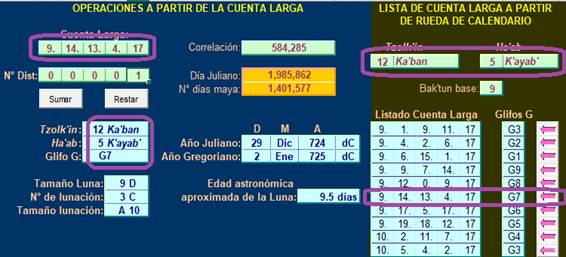
· The LC on QRG Stela E is 9.14.12.4.17, which has to be amended to 9.14.13.4.17 to give a CR of 12-Kaban 5-K’ayab.
· According to the calendar spreadsheet / program, this amended LC corresponds to Glyph-G7.