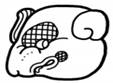


TOK.p31.r2.c2 K&L.p47.#1.1 K&L.p47.#1.4 [K&L.p47.#2&3&5&6 = Zender-TRGiCMW.p6.pdfp1.c1.fig1.b&a&c&d]
EHM EM(ACH) EM(ACH)

BMM9.p17.r5.c4
EHM
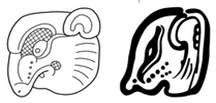
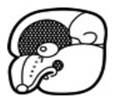
MHD.AS7.1&2 1619st
EHM / EM EM?
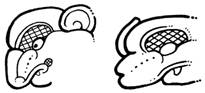
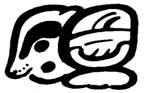
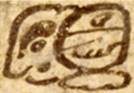
Zender-TRGiCMW.p6.pdfp1.c1.fig1a&b Zender-TRGiCMW.p8.pdfp3.fig4 = Zender-TRGiCMW.p6.pdfp1.c1.fig1d = MHD (Kerr)
TRT monument 6 A10a & H10b K1226 (Blowgunner Pot) D3
EHM EHM
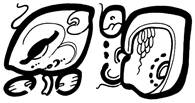
Zender-TRGiCMW.p7.pdfp2.c1.fig2 = Zender-TRGiCMW.p6.pdfp1.c1.fig1c
Xultún-style Black-on-Cream Vessel, Private Collection
EHM(ACH):ma a.ku
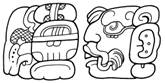
Zender-TRGiCMW.p9.pdfp4.c1.fig5
PAL Tablet of the Cross D7-D8
EHM.<ta:CHAN:na> “God-GI”
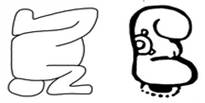
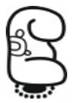
MHD.HT5.1&2 0227st
EHM / EM EM
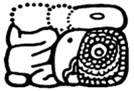
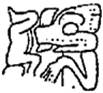
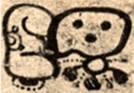
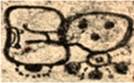
MHD (Safronov) MHD (Graham) MHD (Bibliotheque Nationale de France) MHD (Bibliotheque Nationale de France)
PNG Panel 3 N1 TRS Stela 2 B10 DRE C1 orientation/frame 20b03 DRE D1 orientation/frame 20b04
ti:<EHM.MO’> EHM.u?
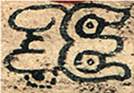
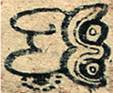
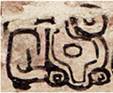
MHD (Bibliotheque Nationale de France) MHD (Bibliotheque Nationale de France) MHD (Bibliotheque Nationale de France)
DRE R’1 orientation/frame 57b04 DRE X’1 orientation/frame 58b03 PAR C11 orientation/frame 04b02
EHM.EK’ EHM.EK’ EHM.EK’
· No glyphs given in K&H, K&L.
· Used more often as a rebus for writing ehm(i) = “to descend” (overwhelmingly so) than for the raccoon as an actual animal.
o The very few occurrences where it doesn’t write “to descend” are in names/titles referring to a raccoon rather than in sentences referring to actual raccoons. This applies to many other words for animals known in Classic Maya: they occur more often in names/titles than as references to the animal in real-life.
o Zender-TRGiCMW.p7.pdfp2.c1.fig2, the Xultún-style Black-on-Cream Vessel is one instance of it meaning “raccoon”, in a name/title. In the label to the figure, Zender explains that this is the name Ehm(ach) Ahk, “Raccoon Turtle”.
· As with many Maya verbs of motion, there is an implicit preposition (in this case “from”):
o Zender-TRGiCMW.p8.fig4 (no explicit preposition): ehm-i chan “descends from the sky”.
o Zender-TRGiCMW.p9.c1.fig5 (with explicit preposition): ehm-i ta chan “Palenque Patron God G1 descends from the sky”.
· Variants (2):
o A. Animal head:
§ A mammal head.
§ An ear in the top right corner, but not a standard mammal ear, more like a feeler with protector, somewhat resembling the inner element of yi.
§ A longish nose, a row of dots forming a spine or reinforcement.
§ Very often, a darkened “protector” for the upper half of the eye. This undoubtedly corresponds to the “characteristic black, mask-like rings around the eyes of raccoons” in real life, primarily (according to Google AI) “to reduce glare and improve nocturnal vision”.
o B. Downward falling figure:
§ The figure of a person with head at the bottom and leg(s) at the top.
§ The figure represents a person falling.
· MHD statistics (2025-12-16) – a search in MHD on “blcodes contains …” gives:
o A. Animal head (AS7): 20 hits (no additional hits if Codices included).
o B. Downward falling figure (HT5): 2 hits (6 additional hits if Codices included).
§ Of the 6 Codical hits:
· 1 is so eroded that it isn’t useful (probably read just from context, rather than from the visible information available).
· The other 5 are very readable, writing either ehmi = “(s)he descended”, or ehm ek’ = “Venus descended”. All 5 are hence gives in the examples above.
· 5 are from the Dresden Codex (including the very eroded one).
· 1 is from the Madrid Codex.
§ Both Classic hits are given as examples above:
· In TRS (= Tres Islas) Stela 2 B10, the preceding 3 glyph-blocks are extremely obscure, and B10b is read as u with uncertainty as well, rendering the whole thing totally obscure.
· Despite this, it’s given as an example because of the extreme paucity of examples of this “falling figure” variant from the Classic period.
§ 5 of the 6 Codical hits – the “non-eroded ones” – are given as examples above. This is because they so clearly resemble the Classical hit (PNG Panel 3 N1) that they lend a lot of support to this reading for the Classical glyph. Without these Codical examples, the reading of the single occurrence of this form in the Classic corpus as EHB might have been more doubted: “it makes sense, but who’s to say for sure”.
In the Classic period, the animal head is much more common than the falling figure, but the total number of examples is reasonably small anyway. The falling figure is the only form in the Codices. So, the “animal head” variant predominated in the Classic period for EHB, with the “falling figure” being rather rare, but the former died out completely in the Codices, leaving only the latter to be the sole variant.