
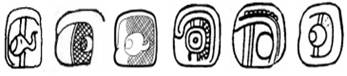


K&H.p81 K&L.p7.#2.6&7&8&9&10&11 BMM9.p11.r6.c1 JM.p78.#4
CH’EN CH’EN CH’EN CH’EN:na


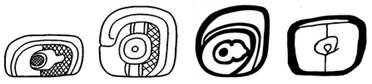

TOK.p13.r3.c2 JM.p77.#4 MC.p163.r1.c2 MHD.HH3.1&2&3&4 598st
CH’EEN CH’EN CH’EEN CH'E'N? / CH'EN? CH'EEN?
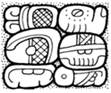

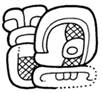
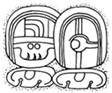
MHD (Safronov) MHD (Moot) MHD (Martin) MHD (Greene)
Denver Panel B6 Tripod plate, LC.p2.196 I3 Museo Amparo Throne D2 PAL House A Pier A D2
<tu:CH’EEN:na>.<<ka’+ba>:CHAN:TE’> u.<CH’EEN:na> tu.<CH’EEN:na> <CHAN:na>.<CH’EEN:na>
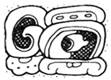


MHD (Schele) MHD (Stuart) MHD (Schele) MHD (Schele)
PAL Temple 14 Tablet G6 PAL Temple 19 Platform O8 PAL Temple 14 Tablet G6 PAL Palace Tablet R19
OCH.<u:CH’EEN:na> CH’EEN.na OCH.<u:CH’EEN:na> <LAKAM:HA’>.<CHAN:CH’EEN>

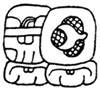
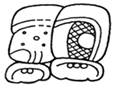
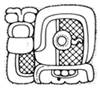
MHD (Schele) MHD (Schele) MHD (Montgomery) MHD (W. Coe)
PAL Temple of the Foliated Cross Alfarda L2 PAL Temple of the Sun N15 PNG Throne 1 F’1 TIK Stela 5 A11
<LAKAM:HA’>.<CHAN:na:CH’EEN:na> <CHAN:na>.< CH’EEN:na> <TAHN:na>.<CH’EEN:na> tu.<CH’EEN:na>

MHD (Graham)
YAX Lintel 25 V1
u.<KAB:CH’EEN>
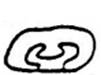


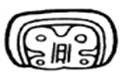

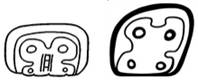
K&L.p7.r1.c1&c2&c3&C4 [K&L.p7.r1.c4 = JM.p77.#2] JM.p78.#3 = MC.p163.r1.c3 MHD.HH2.1&2
CH’EN CH’EN:na
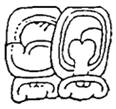
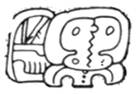
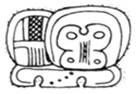
MHD (Schele) MHD (W. Coe) MHD (W. Coe)
CPN Altar A’ E2 TIK Stela 31 G6 TIK Stela 31 H23
<*CHAN:na>.<CH’EEN:na> CHAN.<CH’EEN:na> <CHAN.CH’EEN>:na


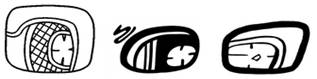
TOK.p13.r3.c1 BMM9.p11.r3.c4 JM.p77.#5 MHD.HH5.1&2&3
CH’EEN CH’EN CH’EN CH'E'N? / CH'EN?
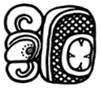


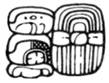
MHD (Polyukhovych) MHD (Polyukhovych) MHD (Polyukhovych) MHD (W. Coe)
CNC Panel 1 B1 CNC Panel 1 C8 CNC Panel 1 I5 TIK Temple 1 Lintel 3 D6
<yu[ku]{noom}>.CH’EEN <yu[ku]{noom}>.<CH’EEN:na> <yu[ku]>.<<no{om}>.CH’EEN>:na> <TAHN:CH’EEN:na>.MUT{ul}


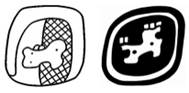
K&L.p7.#2 = JM.p77.#3 TOK.p13.r3.c3 = BMM9.p11.r5.c3 MC.p163.r1.c4 MHD.HH4.1&2
CH’EN CH’EN CH’EN
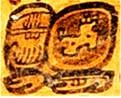
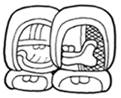
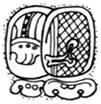
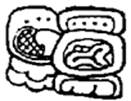
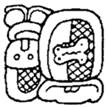
MHD (Kerr) MHD (Schele) MHD (Greene) MHD (Schele) MHD (Schele)
K1398 R4 CPN Stela 13 Altar H1 House D Cornice p29 PAL Temple 17 Tablet G2 PAL TFC M15
<CHAN:na>.<CH’EEN:na> <CHAN:na>.<CH’EEN:na> <CHAN:na>.<CH’EEN:na> OCH.<u:CH’EEN:na> tu.<CH’EEN:na>
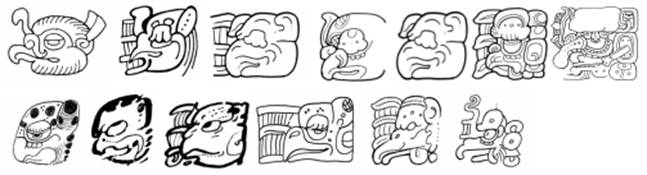

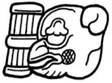
K&L.p15.#3.1-13 [JM.p78.#1 = K&L.p15.#3.4, JM.p78.#2 = K&L.p15.#3.6] TOK.p26.r4.c4 BMM9.p19.r3.c1
CH’EN CH’EEN CH’EN

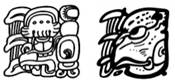
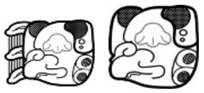

MC.p163.r1.c5 ~= K&L.p15.#3.4 MHD.BT6.1&2 1544bh 1544br MHD.SD9
CH’EEN.na CH'E'N? / CH'EN? CH'EEN? CH'E'N? / CH'EN?


Stuart Graham
CRN Panel 1 H6 NAR Stela 23 F9 .
<yu[ku]{noom}>.<CH’EEN:na> u:CH’EEN

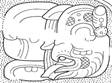
Helmke&Awe-StaST.p11.c2.fig11 = Martin-AMP.p129.fig21
XUN Panel 4 pB3 XUN Panel 4 pB3
<TAHN:na>.CH’EEN <TAHN:na>.CH’EEN
· Variants (2):
o A. Boulder – features:
§ A cave or symmetric cave – often divided in half by a vertical line or band, with the right half cross-hatched (to indicate the darkness within the cave).
§ An infixed element, usually straddling the light and dark areas – this element can be one of four things:
· Eyeball:
o Always straddles the light and dark areas.
o Halfway between the floor and the ceiling.
o (Optionally but quite commonly) there can be an optic nerve to the right.
o (Optionally) the pupil can be cross-hatched.
· Femur:
o Doesn’t have a division into a light and dark area.
o There are two sub-subvariants (see KováčEtAl-TCatP.p3.pdfp3.col1.para3.l+1 below):
§ “Knob” of the femur.
§ Femur in cross-section.
· K’IN:
o May or may not straddle the light and dark areas.
o When straddling, it behaves like the bone-jaw and the eyeball, i.e., is halfway between the floor and the ceiling.
o When not straddling, it can be either:
§ Totally within the dark area (with a tendency to being on the floor in that case?), or
§ Occupy almost the entire area of the cave – in this case there is no dark area anymore.
· Jawbone with 2 to 4 teeth (touching), on the left upper edge of the jaw.
o Always straddles the light and dark areas.
o Halfway between the floor and the ceiling.
Do not confuse this with the visually similar MUK = “grave”. Both are divided down the middle by a vertical line or band, with darkness in the right half. MUK has a “step” outline on the top and left, while CH’EEN has a boulder outline. Also, MUK has an infixed skull, whereas CH’EEN has one of the three elements described above.
o B. Bird head – features:
§ Left (optional but common): an element which resembles a bunch of bound sticks:
· Three or more straight vertical bands (“sticks”), with
· Three superimposed horizontal cross-bands (top, middle, and bottom), “binding” the “sticks” together.
This often resembles TAJ = “torch”, without the “flames” at the end, however, there are also variants where the three horizontal bands taper to the left, making them resemble flames or leaves rather than bands which “bind” a bunch of sticks (e.g., K&L.p15.#3.6&7&10&12, TOK.p26.r4.c4)
§ Right:
· A beak on the left.
· (Optional) feather (=o) in the top right – there are a few rare instances of something resembling a mammal ear (K&L.p15.#3.5 and BMM9.p19.r3.c1).
· (Optionally) a trilobate element covering the eye, leaves pointing down – it can resemble CH’ICH’ or JUUN (“jewel”).
The “bound element” (the torch-like element on the left) is occasionally omitted (e.g., K&L.p15.#3.1&4&5&8&9&13, MC.p163.r1.c5).
· KováčEtAl-TCatP.p3.pdfp3.col1.para3.l+1: The Classic glyph for the cave has a high variability. It may contain symbolism of darkness or semi-darkness, suggesting a combination of light and darkness. A common variation is that the head of a human femur is placed in the center, either cut in profile or as seen from above (Fig. 1a, c). However, in the center of the blending of light and dark, there may also be a sign for a human jawbone (Fig. 1d), which has an identical meaning – death, similar to the cut of the bone. Another sign at the center of the blending of dark and light is the impinged eye (Fig. 1b), which was also used to evoke death, thus similar to the bone. At the identical interface, however, we also find the sign k’in, i.e. sun/day, which perhaps this time emphasizes the light side from the same interface of darkness and light (Fig. 1e).
· Dorota Bojkowska: the difference between CH’EEN (in the K’IN variant) and YIHK’IN is that:
o In CH'EEN:
§ The K'IN is small(er) inside the cave.
§ The K’IN itself is not dark (no part of the K’IN is cross-hatched).
§ Half the cave is dark (with the K’IN partially or mostly in the dark part, and often towards the bottom).
o In YIHK’IN:
§ The K'IN occupies (almost) the whole cave.
§ Half of the K'IN is dark.
· Do not confuse the bird-head variant of CH’EEN with the (only superficially) vaguely similar variant of ha (the “knot and skull” variant):
o In CH'EEN:
§ The element on the left is a bundle of sticks tied in three positions.
§ The element on the right is a bird-head.
o In ha:
§ The element on the left is an asymmetric knot.
§ The element on the right is a skull.
· MHD statistics (2026-03-05) – a search in MHD on “blcodes contains …” yields:
o Boulder outline – 205 hits:
§ HH3 (impinged eyeball): 128 hits.
§ HH2 (impinged femur): 66 hits.
§ HH5 (impinged K’IN): 35 hits.
§ HH4 (impinged jawbone): 11 hits.
o Bird head (BT6): 76 hits.
· The use of the word “impinged”, in particular in connection with the element infixed in the CH’EEN glyph, appears to be very specific to Maya epigraphy:
o Brady&Coltman-BatC.p230.pdfp4.para1.l+11: The disembodied eyeball also appears with the impinged bone glyph on a half-shaded back ground and so may, as Stuart suggests, relate to the underground space.
o Helmke&Brady-EaAEfCD.p6.pdfp6.para4: In 1997 David Stuart proposed the logographic value CH’EN ‘cave’ for the so-called “Impinged Bone” sign (David Stuart personal communication 1998 and 2002; Vogt and Stuart 2005: 157-163; see T598 and T599 in Thompson 1962: 223-224).
o Brady&Colas-NMSF.p158.pdfp10.para3: The hieroglyph in E9 PULUUY is a well-accepted verb for war. As such, the phrase has been interpreted as a “burning of Yaxhá” (Martin and Grube 2000: 76). We would like to emphasize that the object of the burning is specified explicitly as the impinged bone sign read by Stuart as CH’EEN meaning “cave.” Since Stuart and Houston’s (1994) study of toponyms, the impinged bone sign has been regarded as a general glyph for “place” in combination with a prefixed CHAN hieroglyph (Stuart and Houston 1994: 11). [Sim: the last sentence is a reference to Chan Ch’een meaning (approximately) “city”.]
o Bassie-TJCP.p35.pdfp35.para4: The Period Ending is followed by the so-called "impinged bone" glyph that has been interpreted to pictographically represent a cave (Bassie-Sweet 1996:64, 95-103) and to represent the word ch’een "cave" (Stuart 1999).
o KováčEtAl-TCatP.p3.pdfp3.col1.para3.l-3: Another sign at the center of the blending of dark and light is the impinged eye (Fig. 1b), which was also used to evoke death, thus similar to the bone. At the identical interface, however, we also find the sign k’in, i.e. sun/day, which perhaps this time emphasizes the light side from the same interface of darkness and light (Fig. 1e).