| CMGG entry for syllabogram ka
|
|
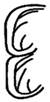
Variant: full fish
MC K&H JM TOK.p28.r1.c1
MHD.AA1s.4 0738st
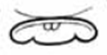
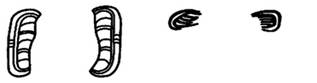
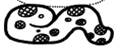
· Iconographic origin: o Very clearly, the use of this glyph as a syllabogram ka is derived from its use as a logogram KAY = “fish”, via the acrophonic principle, where the final consonant is dropped, leaving the initial and vowel. o MHD captures this by having MHD.AA1s for ka and MHD.AA1a for KAY. o Bonn, with an organizing principle based on the original Thompson T-numbers, perforce has totally different 4 initial digits for the full fish (0738st) given as ka or KAY vs. the “comb” variant (actually just the (tail?)fin, given only as ka. Both MHD’s and Bonn’s approach are equally valid – they just lead to different resulting codes. MHD’s enables the distinction between the full fish used as a logogram vs. its usage as a syllabogram (the -a vs. -s distinction), whereas Bonn’s doesn’t. Both systems allow the distinction between the full fish and the “comb” variant. · Features – the entire body of a fish: o Open mouth. o Medium-sized eye (the K&H example shows an unusual “fringed face” infixed into the eye of the fish). o Tail fin. o Forehead ornament, resembling a fish fin (wavy parallel lines). o (Very often,) a pectoral fin. o (Very often,) an anticlockwise spiral to the right of the mouth (middle of the bottom). This seems to be common in fish, amphibians, and reptiles (and occasionally birds?).
|
|
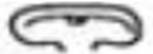
Variant: comb
MC JM K&H TOK.p7.r3.c1 MHD.AA1s.3&5 0025st
MC MHD.AA1s.1
MHD.AA1s.2 0025md
CNC Panel 1 A5 4.<ka:se:wa>
0025mt
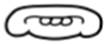
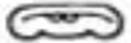
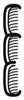
· Features – the (tail?) fin of the fish, having a distinctly “rectangular” outline, i.e., much longer along one axis than the other: o A “crescent”, always pointing “inwards” (i.e., in the direction of the “main sign”). o Often, a bold or reinforced inner edge. o A series of parallel ticks (often very slightly curved) inside the crescent, the ticks not ending in a dot. · Subvariants (3 or 4, depending on what one wishes to consider a subvariant vs. being a sub-subvariant): o A. Plain comb: As described above. o B. Comb with flourish: § Like the plain comb, but with one end having an extra curve with a sharp tip. § Very commonly found on both sides of the ISIG (but that might be better considered under the “symmetric variant, see below). o C. Double comb: § The combs touch along the shorter axis. § Despite the fact that there are two combs present, only a single syllable ka is intended, not ka-ka. o D. Triple comb: § Bonn recognizes this subvariant, giving it the suffix -mt, whereas MHD probably subsumes it under the double comb.
|
|
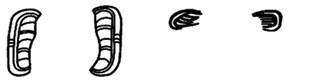
Variant: symmetric
MHD.AA2.1 MHD.AA2.3 1600st
1600md
MHD.AA2.2 1600fc
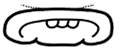
· Features: o The “simpler” comb-variant, but doubled and not touching one another. o As such, this variant always has only a vertical orientation (to the left and right of the main sign), never a horizontal orientation (above and below). o They also always flank symmetrically, with the crescents pointing in the direction of the “main sign”, in opposite directions to one another. o All these aspects make it very different from the “doubled” ka-comb variant. · Subvariants (2 or 3) o A. Doubled (symmetrical, flanking) plain combs. o B. Doubled (symmetrical, flanking) tall, stretched out (full) fish. § This subvariant is very similar to the doubled (symmetrical, flanking) plain combs, just that each “comb” is replaced by a full fish. § In that sense, it’s much more closely related to the former than it is to the full figure variant – i.e., it feels much more like replacing each comb (intrinsically doubled and symmetrically flanking) than it does to doubling and stretching out the full fish. § Bonn clearly feels this as well, giving the “B” the code 1600fc and “A” the code 1600st, with the shared 1600 and the -fc emphasizing the parallel as being the “figure” equivalent of 1600st, rather than giving “B” a code with the same numerical part as the (boulder-outline) full-fish form (i.e., 0738st), with a different suffix for doubling that variant (e.g., 0738md, with -md for “multiplication doubled”). § Bonn has made the distinction between “A” and “B” more explicit, in giving them different suffixes (-st/-md vs. -fc), while MHD treats them as just different examples of MHD.AA2. I.e., a database search in MHD wouldn’t be able to distinguish “A” from “B”, but an equivalent search in the Bonn database (when completed) would. § Bonn has even gone to the extent of enabling the making of a distinction between a symmetrical comb subvariant (1600st) and a doubled symmetrical comb subvariant (1600md). Here too, Bonn acknowledges the closer link between 1600md as a doubling of 1600st, rather than as a “symmetricalizing” of the two-comb variant 0025md (though the reason for this might just as much be because the structure of the “suffix methodology” isn’t complex enough to capture this).
|